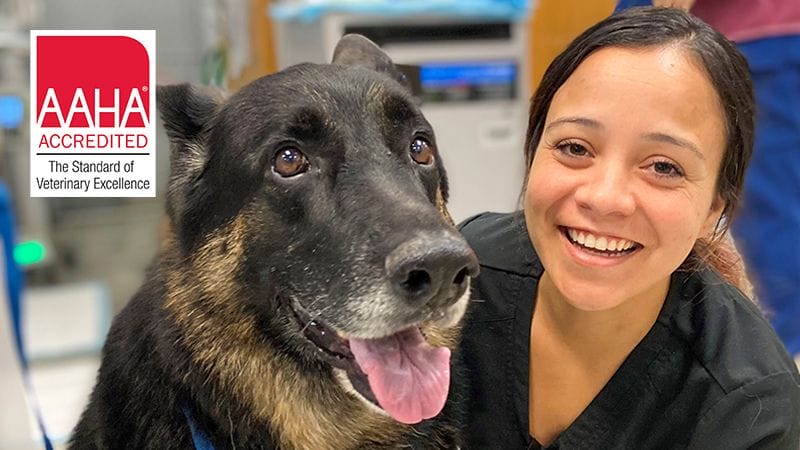








24/7 Emergency and Specialty Pet Care Close to Home
Serving more than 16,000 patients a year, the MedVet Asheville team is a trusted partner in care for family veterinarians and pet lovers in Asheville, Buncombe County, and surrounding communities in North Carolina. We serve as an extension of your family veterinarian by providing advanced emergency and specialty pet care.
Our 24-hour veterinary emergency care is available every day of the year to care for your pet when emergencies arise. When your pet is in critical condition, you can count on our expert team to deliver skillful, compassionate care to help your pet achieve the best possible outcome. If your pet is facing an emergency, you can come directly to our animal hospital – no appointment is needed.
Ophthalmology and Surgery Care You Can Count On
In addition to emergency animal care, we offer specialty veterinary care to keep your pet in the best health. Our ophthalmology team, led by Dr. Petra Lackner, is extensively trained in diagnosing and treating eye conditions. Our surgery team, led by Dr. MacKenzie Whyte, is dedicated to improving the quality and length of life for pets needing advanced surgical procedures, including soft tissue and orthopedic surgery.